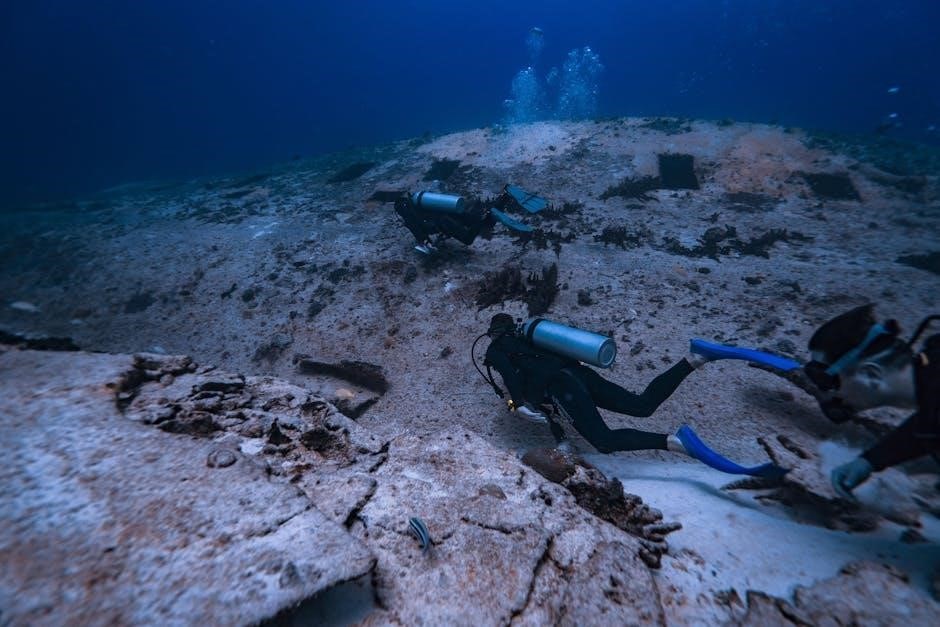
Navy diving‚ guided by the U.S. Navy Diving Manual (NAVSEA 0994-LP001-9010)‚ encompasses a broad spectrum of underwater operations.
This manual‚ alongside resources like ATP-57(B)‚ provides essential procedures and safety guidelines for divers.
It’s a critical resource for both recreational and military applications‚ detailing everything from SCUBA gear to complex dive tables.
The manual also covers Dive Life Support Systems (DLSS) and proper NID usage‚ ensuring operational readiness and diver safety.
Historical Overview of Navy Diving
Navy diving’s roots trace back to antiquity‚ evolving from simple breath-hold techniques to sophisticated systems detailed in modern manuals like the U.S. Navy Diving Manual.
Early applications focused on salvage‚ ship husbandry‚ and underwater repairs‚ documented through evolving operational procedures.
The 20th century witnessed advancements in SCUBA and Surface Supplied Diving Systems (SSDS)‚ reflected in manual revisions.
Post-World War II‚ military applications‚ including combat diving‚ spurred further development‚ necessitating comprehensive guidance found within the manual’s pages.
Purpose of the Navy Dive Manual
The U.S. Navy Diving Manual (NAVSEA 0994-LP001-9010) serves as the definitive guide for all Navy diving operations‚ ensuring standardized procedures and safety.
It details equipment functionality‚ dive planning‚ emergency protocols‚ and life support systems‚ like DLSS‚ offering comprehensive instruction.
The manual supports both recreational and specialized dives – salvage‚ combat‚ and ship husbandry – providing critical information for instructors and divers alike.
Its purpose is to minimize risk and maximize operational effectiveness.

Physiology of Diving
Navy diving physiology‚ detailed in the manual‚ addresses critical factors like decompression sickness (DCS)‚ nitrogen narcosis‚ and immersion diuresis.
Understanding these effects is crucial for safe dive planning and execution.
Decompression Sickness (DCS) – Understanding the Bends
The U.S. Navy Diving Manual meticulously explains Decompression Sickness (DCS)‚ commonly known as “the bends‚” arising from nitrogen bubbles forming in tissues during ascent.
Proper dive table usage and adherence to no-decompression limits‚ as outlined in the manual‚ are paramount to prevent DCS.
The manual details symptoms‚ treatment protocols‚ and the physiological mechanisms behind nitrogen absorption and elimination‚ emphasizing the importance of controlled ascent rates and safety stops.
Nitrogen Narcosis and its Effects
The U.S. Navy Diving Manual comprehensively addresses Nitrogen Narcosis‚ a condition affecting divers at depth due to increased nitrogen partial pressure.
The manual details how nitrogen impacts the central nervous system‚ causing impaired judgment and cognitive function‚ similar to intoxication.
It stresses the importance of awareness‚ depth management‚ and utilizing appropriate gas mixtures‚ like Trimix‚ to mitigate narcosis risks during complex underwater operations.
Immersion Diuresis and Fluid Balance
The U.S. Navy Diving Manual highlights Immersion Diuresis‚ a physiological response where divers experience increased urine production due to hydrostatic pressure.
This fluid shift‚ causing a loss of 250-500cc‚ can lead to dehydration and reduced blood volume‚ impacting performance and increasing decompression sickness risk.
The manual emphasizes pre-dive hydration and monitoring fluid balance to maintain optimal physiological function throughout underwater operations.

Dive Planning & Procedures
The U.S. Navy Diving Manual details meticulous pre-dive inspections‚ equipment checks‚ and the crucial use of dive tables for safe operations.
Proper ascent rate calculations and adherence to safety stop protocols are paramount for diver wellbeing.
Pre-Dive Inspection and Equipment Checks
The Navy Diving Manual emphasizes a systematic approach to pre-dive preparation‚ beginning with a thorough inspection of all life support equipment.
This includes verifying SCUBA gear functionality‚ checking DLSS components‚ and ensuring proper operation of communication systems.
Inspectors must confirm regulator performance‚ buoyancy control devices‚ and the integrity of the dive suit.
A detailed checklist‚ as outlined in the manual‚ guarantees no critical item is overlooked before entering the water‚ maximizing diver safety.
Dive Table Usage and No-Decompression Limits
The U.S. Navy Diving Manual details the critical use of dive tables for calculating nitrogen absorption and decompression requirements.
These tables‚ like those found in the manual‚ establish no-decompression limits based on depth and bottom time‚ ensuring diver safety.
Understanding these limits is paramount to avoid decompression sickness (DCS).
The manual also provides guidance on adjusting tables for mixed gas dives‚ including Nitrox‚ to optimize dive profiles and minimize risk.
Calculating Ascent Rates and Safety Stops
The U.S. Navy Diving Manual emphasizes precise ascent rate calculations to manage nitrogen release and prevent DCS.
Controlled ascent rates‚ typically around 30 feet per minute‚ are crucial‚ as detailed within the manual’s operating procedures.
Mandatory safety stops‚ usually at 15 feet for 3-5 minutes‚ are integral to off-gassing and reducing bubble formation.
The manual provides specific guidelines for adjusting ascent profiles based on dive depth and bottom time.

Diving Equipment
The Navy Diving Manual details SCUBA gear‚ Surface Supplied Diving Systems (SSDS)‚ and dive computers.
It outlines components‚ functionality‚ and limitations of each‚ ensuring safe and effective underwater operations.
SCUBA Gear: Components and Functionality
The U.S. Navy Diving Manual meticulously details SCUBA equipment‚ covering regulators‚ buoyancy compensators‚ and cylinders.
It explains how each component functions‚ emphasizing proper maintenance and pre-dive checks.
The manual stresses understanding the interplay between these elements for safe depth control and gas management.
Furthermore‚ it addresses potential malfunctions and emergency procedures related to SCUBA gear‚ vital for diver preparedness.
Surface Supplied Diving Systems (SSDS)
The U.S. Navy Diving Manual comprehensively outlines Surface Supplied Diving Systems (SSDS)‚ detailing their advantages for prolonged‚ deep-water operations.
It covers components like umbilicals‚ helmets‚ and gas supply panels‚ emphasizing safety protocols and operational procedures.
The manual explains how SSDS provide a continuous‚ breathable gas mix‚ reducing reliance on limited-duration SCUBA tanks.
Maintenance‚ troubleshooting‚ and emergency response related to SSDS are also thoroughly addressed.
Dive Computers: Features and Limitations
The U.S. Navy Diving Manual acknowledges the increasing use of dive computers‚ outlining their features like depth monitoring‚ bottom time tracking‚ and decompression calculations.
However‚ it also stresses understanding their limitations‚ emphasizing that computers are tools‚ not replacements for proper training and dive planning.
The manual details how to cross-reference computer readings with traditional Navy Dive Tables (Appendix 2B) for redundancy.
It also addresses potential computer malfunctions and the importance of conservative dive profiles.

Emergency Procedures
The U.S. Navy Diving Manual details critical responses to emergencies‚ including decompression sickness‚ lost diver protocols‚ and equipment failures.
It emphasizes swift action and adherence to established operating procedures for diver safety.
Dealing with Decompression Sickness
The U.S. Navy Diving Manual provides comprehensive guidance on recognizing and managing decompression sickness (DCS)‚ commonly known as “the bends”.
Immediate administration of 100% oxygen is paramount‚ alongside prompt recompression therapy in a chamber.
Divers must be carefully monitored for neurological symptoms‚ and treatment protocols are detailed based on severity.
The manual stresses preventative measures‚ like proper dive planning and adherence to dive tables‚ to minimize DCS risk.
Lost Diver Procedures
The U.S. Navy Diving Manual outlines strict protocols for lost diver scenarios‚ emphasizing rapid response and systematic searching.
Initial actions include establishing communication if possible‚ and deploying a search pattern based on currents and last known position.
Surface support must immediately notify relevant authorities and prepare for extended search operations.
The manual details specific signaling techniques and emphasizes the importance of buddy diving and pre-dive briefings to prevent such incidents.
Equipment Malfunction Response
The U.S. Navy Diving Manual dedicates significant attention to responding to equipment failures underwater.
It stresses immediate assessment of the malfunction‚ followed by controlled ascent if necessary‚ prioritizing diver safety.
Procedures cover failures in SCUBA gear‚ Surface Supplied Diving Systems (SSDS)‚ and dive computers.
The manual emphasizes buddy assistance‚ emergency gas sharing‚ and utilizing redundant systems to mitigate risks during underwater emergencies.
Navy Dive Life Support Systems (DLSS)
The Navy Diving Manual details DLSS components and operation‚ crucial for maintaining diver physiology.
Proper NID usage for cleaning is emphasized‚ ensuring system effectiveness and diver well-being during operations.
DLSS Components and Operation
According to the U.S. Navy Diving Manual‚ the Dive Life Support System (DLSS) is a complex network designed to provide a breathable gas mixture and maintain a safe diving environment.
Key components include gas supply panels‚ umbilicals‚ and communication systems‚ all working in concert to deliver appropriate gas mixtures at required pressures.
Operation involves meticulous monitoring of gas quality‚ pressure‚ and flow rates‚ alongside diligent maintenance to prevent equipment failure and ensure diver safety throughout the dive profile.
NID (Non-Ionic Detergent) Usage and Maintenance
The U.S. Navy Diving Manual emphasizes the critical role of Non-Ionic Detergent (NID) in maintaining DLSS cleanliness and preventing contamination.
Proper NID usage involves diluting it with water to create a cleaning solution for exterior surfaces of DLSS components‚ avoiding internal parts.
Maintenance requires regular inspection of NID mixtures and adherence to strict protocols to ensure effectiveness and prevent damage to sensitive equipment.
Mixed Gas Diving
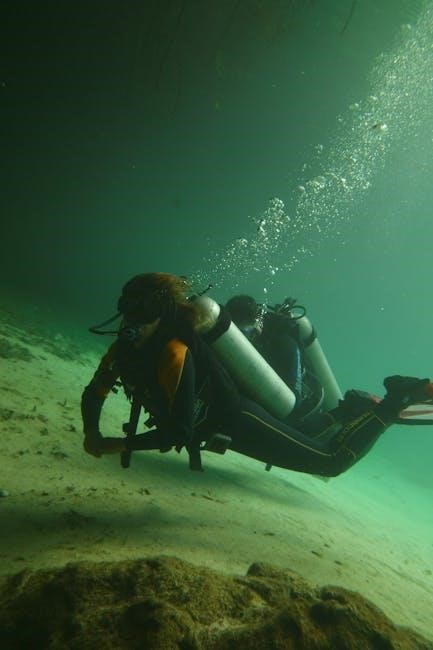
The U.S. Navy Diving Manual details mixed gas diving‚ including Nitrox‚ Heliox‚ and Trimix applications.
It addresses oxygen toxicity management and provides tables for calculating safe dive profiles with these gas mixtures.
Nitrox Diving: Benefits and Considerations
The U.S. Navy Diving Manual extensively covers Nitrox diving‚ highlighting its benefits like reduced nitrogen absorption and extended bottom times.
However‚ the manual emphasizes crucial considerations‚ including increased partial pressure of oxygen and the potential for oxygen toxicity.
Divers must utilize specific Nitrox dive tables and adjustments to standard tables‚ carefully calculating depth and time limits to maintain safety.
Proper training and adherence to the manual’s guidelines are paramount when utilizing enriched air mixtures.
Heliox and Trimix Diving Applications
The U.S. Navy Diving Manual details the specialized applications of Heliox and Trimix‚ crucial for deep saturation and military dive operations.
These mixed gases reduce narcosis and oxygen toxicity at significant depths‚ extending operational capabilities.
The manual provides detailed procedures for gas blending‚ decompression schedules‚ and equipment configuration specific to these mixtures.
Understanding the complexities of these gases‚ as outlined in Vol. 2‚ is vital for safe and effective deep diving.
Oxygen Toxicity and Management
The U.S. Navy Diving Manual comprehensively addresses the risks of oxygen toxicity‚ a critical concern in both Nitrox and mixed gas diving.
It details central nervous system (CNS) and pulmonary oxygen toxicity‚ outlining exposure limits and preventative measures.
The manual emphasizes meticulous gas planning‚ depth and time considerations‚ and recognizing early symptoms.
Effective management strategies‚ including emergency procedures‚ are crucial for diver safety‚ as detailed within the manual’s guidelines.
Underwater Communication
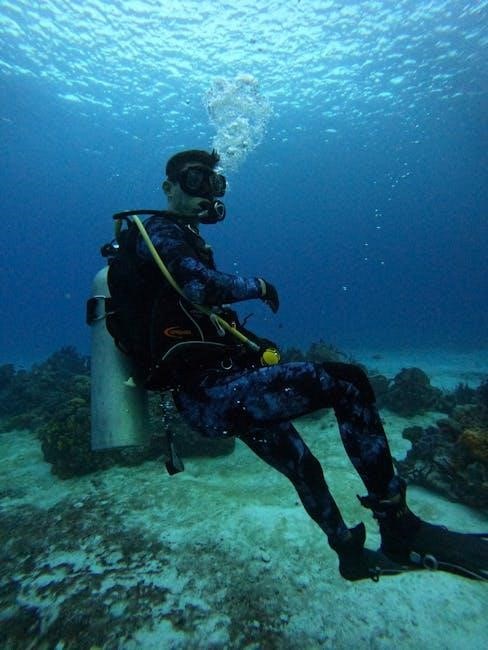
The U.S. Navy Diving Manual details both hardwire systems and wet phones for underwater communication.
These technologies enable crucial contact during operations‚ ensuring coordinated teamwork and safety for divers.
Hardwire Communication Systems
Hardwire communication systems‚ as outlined in the U;S. Navy Diving Manual‚ provide a reliable and secure method for direct voice communication with divers.
These systems utilize a physical cable connecting the diver to the surface‚ offering clear audio transmission even in challenging underwater environments.
They are essential for complex operations requiring precise instructions and real-time feedback‚ such as salvage operations or ship husbandry.
The manual details proper setup‚ testing‚ and maintenance procedures to ensure optimal performance and safety.
Wet Phones and Through-Water Communication
The U.S. Navy Diving Manual details wet phones and through-water communication as alternatives to hardwire systems‚ offering increased diver mobility.
These systems transmit voice via acoustic signals through the water‚ though clarity can be affected by environmental factors;
The manual emphasizes proper technique and limitations‚ noting potential interference and reduced range.
Effective communication protocols and understanding signal degradation are crucial for safe and successful underwater operations utilizing these technologies.

Specialized Diving Operations
The U.S. Navy Diving Manual outlines complex operations like salvage‚ ship husbandry‚ and combat diving.
These specialized dives demand advanced skills and adherence to strict safety protocols detailed within the manual.
Salvage Diving Techniques
The Navy Diving Manual meticulously details salvage operations‚ covering assessment of underwater damage and recovery procedures.
Techniques include controlled lifting‚ patching‚ and underwater welding‚ all governed by specific guidelines to prevent further structural compromise.
Divers utilize specialized tools and rigging‚ with a strong emphasis on pre-dive planning and risk mitigation.
The manual stresses the importance of thorough documentation and adherence to established safety protocols during these challenging underwater salvage missions.
Ship Husbandry and Underwater Repairs
The U.S. Navy Diving Manual provides comprehensive guidance on underwater ship maintenance‚ known as ship husbandry.
Divers perform tasks like hull cleaning‚ propeller inspection‚ and damage assessment‚ utilizing specialized tools and techniques.
Underwater welding and patching are crucial repair methods detailed within the manual‚ ensuring vessel integrity.
Strict adherence to safety protocols and detailed documentation are paramount during these operations‚ maintaining operational readiness.
Combat Diving and Military Applications
The U.S. Navy Diving Manual outlines procedures for specialized military diving operations‚ including reconnaissance and demolition.
Combat divers utilize advanced techniques‚ often with mixed gases‚ for covert underwater missions.
The manual details equipment configurations and tactical considerations for challenging environments.
United States Special Operations relies heavily on these protocols‚ emphasizing stealth‚ precision‚ and adherence to strict safety standards during critical deployments.

Dive Tables and Charts
U.S. Navy Dive Tables‚ detailed in the Manual‚ calculate nitrogen absorption/elimination.
Adjustments exist for Nitrox dives‚ ensuring safe ascent profiles and minimizing decompression sickness risks.
Depth and time are crucial considerations.
U.S. Navy Dive Tables – Detailed Explanation
U.S. Navy Dive Tables are foundational for safe diving‚ meticulously calculating nitrogen uptake and off-gassing during immersion.
These tables‚ a core component of the Navy Diving Manual‚ utilize depth and bottom time to determine required safety stops and ascent rates.
Divers navigate the tables by first identifying their maximum depth and corresponding bottom time‚ then referencing the appropriate group letter.
This letter dictates the required decompression schedule‚ ensuring adequate nitrogen elimination to prevent decompression sickness (DCS).
Understanding table usage is paramount for all divers operating under Navy guidelines.
Nitrox Dive Tables and Adjustments
Nitrox Dive Tables‚ detailed within the Navy Diving Manual‚ account for the reduced nitrogen content in enriched air mixtures.
These tables require adjustments based on the oxygen percentage‚ effectively extending no-decompression limits compared to air dives;
Divers must accurately determine their Equivalent Narcotic Depth (END) to correctly utilize Nitrox tables‚ mitigating risks associated with oxygen toxicity.
Proper adjustments are crucial for safe dive planning‚ maximizing bottom time while minimizing decompression obligations.
Careful adherence to these tables is essential for all Nitrox certified divers.
Depth and Time Considerations
The U.S. Navy Dive Tables‚ as outlined in the Navy Diving Manual‚ fundamentally link depth and bottom time to nitrogen absorption.
Increased depth and extended bottom times necessitate longer decompression stops to safely eliminate excess nitrogen.
Divers must meticulously plan dives‚ considering these factors to remain within no-decompression limits.
Accurate depth monitoring and timekeeping are paramount‚ as exceeding limits can lead to decompression sickness.
Proper planning ensures a safe and enjoyable diving experience.
Appendices & Resources
Appendices include the U.S. Navy Diving Manual (NAVSEA 0994-LP001-9010) in PDF format‚ Dive Computer references (Appendix 2B)‚ and environmental considerations (Appendix 2C).
U.S. Navy Diving Manual (NAVSEA 0994-LP001-9010)
The U.S. Navy Diving Manual‚ designated NAVSEA 0994-LP001-9010‚ serves as the foundational document for all Navy diving operations.
Available in PDF format‚ it comprehensively details procedures‚ safety protocols‚ and equipment guidelines.
This manual is crucial for understanding mixed gas diving‚ DLSS operations‚ and utilizing dive tables effectively.
It’s a vital resource for both training and operational dives‚ ensuring adherence to established standards.
Dive Computer References (Appendix 2B)
Appendix 2B of the U.S. Navy Diving Manual provides essential information regarding dive computers.
It details features‚ limitations‚ and proper usage of various models‚ supplementing traditional dive table calculations.
Understanding these references is crucial for divers utilizing computer-assisted diving‚ ensuring accurate decompression tracking.
The appendix aids in interpreting computer data and making informed decisions during underwater operations.
Environmental Considerations (Appendix 2C)
Appendix 2C of the U.S. Navy Diving Manual addresses the crucial impact of the underwater environment on diving operations.
It outlines considerations for water temperature‚ visibility‚ currents‚ and marine life.
Divers must understand these factors to mitigate risks and minimize ecological disturbance.
This section emphasizes responsible diving practices and environmental stewardship during all underwater activities.